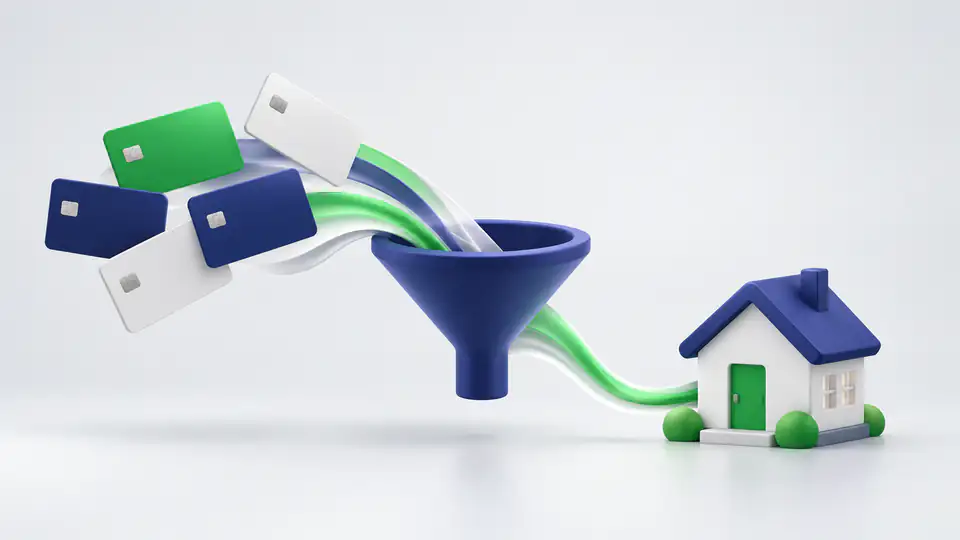
Credit cards, personal loans and car payments can add up. Some homeowners use a cash-out refinance to pay them off with one new mortgage payment. It can make sense in some cases, but it also carries real risks. Here is how to think it through.
What it means
A cash-out refinance replaces your current mortgage with a new, larger one. You receive the difference in cash and can use it to pay off other debts. Your payoff of those debts is now part of your mortgage balance.
Possible benefits
- One monthly payment instead of several
- A mortgage rate is often lower than credit card rates, though that depends on your situation and the market
- A fixed payment schedule can make planning easier
Important risks
- Your debts become secured by your home. If you cannot pay, you could lose the home, which is not the case with credit card debt.
- A longer repayment period can mean more total interest, even with a lower rate.
- Closing costs usually apply and are often a percentage of the loan amount.
- You may give up a mortgage rate that is better than today’s rates, so compare carefully.
- If you run the cards up again, you end up with a bigger mortgage and new debt.
Steps to consider
- List your debts, balances and interest rates
- Check how much equity you have. Lenders usually limit how much you can borrow against your home, and the limit depends on the loan program
- Ask for a Loan Estimate and compare it with what you pay today, including closing costs
- Calculate how long it would take to recover the closing costs
- Decide how you will avoid taking on new debt
Other options to compare
Depending on your situation, a second loan or a home equity line of credit may let you keep your current first mortgage. Credit counseling or a debt repayment plan may also be worth a look.
This is general information, not financial or legal advice.
Every borrower is different. If you would like to talk through your own situation, the MonaLending team is happy to help.